
Indian Oil Corporation sought an increase in prices of petrol, diesel, domestic LPG and PDS kerosene on Tuesday as spiralling global oil prices had put "enormous" burden and may result in a revenue loss of over Rs 8,500 crore (Rs 85 billion) this fiscal. While the government and oil companies were bearing their share of the burden, the consumers have so far been spared from any hike in fuel prices despite crude oil touching a historic high of $93 per barrel.
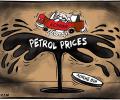
Petrol and diesel prices on Thursday climbed to fresh highs in the country as rates were hiked by the most in recent times, even as fuel retailers said the government can cut taxes to ease consumer burden. Petrol and diesel price was hiked by 35 paise per litre each after a gap of a week, according to price notification of state-owned fuel retailers. The increase took petrol prices to a fresh high of Rs 86.65 a litre in Delhi and to Rs 93.20 in Mumbai.
"They (prices of petroleum products) should be linked to world prices," Planning Commission Deputy Chairman Montek Singh Ahluwalia told PTI when asked about the global crude prices now surging to about $70 a barrel.
Admitting that oil prices are the single biggest worry for him, Finance Minister P Chidambaram has hinted at revision in petroleum prices saying consumers too would have to share the burden.

India is the world's fourth-biggest oil consumer, importing four-fifths of its needs as its own output shrinks.

The FAO's price index, which measures monthly price changes for a basket of grains, oilseeds, dairy, meat and sugar, averaged 207.8 points last month as compared with 214.6 points in May 2013, falling nearly 3.2 per cent.

Wholesale price inflation remained in the negative territory for the fourth month in a row in July at (-)1.36 per cent, even though prices of food items, especially vegetables, skyrocketed. The inflation, however, has inched up from (-)4.12 per cent recorded in June fuelled by 62.12 per cent rise in vegetable prices. In July last year, wholesale price index (WPI) was 14.07 per cent.
In a bid to further cool down edible oil prices and curb hoarding, the Centre on Friday extended stock limits on edible oils and oilseeds till June 30. Besides, the government has specified the stock limits that have to be imposed by states that have not implemented the earlier order on the limits. In October 2021, the ministry of consumer affairs had imposed stock limits till March 2022 and left the decision to states to decide on the stock limits based on available stock and consumption pattern.

RBI's interest rate decision, macroeconomic data, global trends and trading activity of foreign investors are the crucial factors to drive equity markets in a holiday-shortened week ahead, analysts said. Markets would remain closed on Monday for Gandhi Jayanti. "While global cues will continue to dictate trends in local markets, focus will shift to RBI's monetary policy announcement on Friday. "Although the market is expecting a status quo on interest rates, global concerns like rising US dollar index and bond yields coupled with surging crude oil prices continue to weigh on investors' minds.
The multilateral body has also asked the policymakers to take action to reduce risks arising from increased scarcity of oil resources.

As the world's third-largest oil importer and consumer, India is running out of options as the relentless surge in international oil prices make it imperative to pass them on to consumers, officials said on Monday. India imports 85 per cent of its crude oil needs and about half of its natural gas requirement. While the imported crude oil is turned into fuels such as petrol and diesel, gas is used as CNG in automobiles and fuel in factories.

'The market's nervousness ahead of anticipated US tariffs has led to a significant downturn in Indian equities.'

Upstream firms have a tremendous financial pressure due to selling crude at subsidised rates to oil marketing firms.
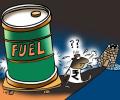
A realistic approach towards tax and stock taking is necessary, rather than the old narrative of bringing all petroleum products under GST and playing the blame-the-state game.

Oil subsidies to fall 44% in FY15.
Oil consumers and producers united yesterday to warn that extreme price volatility was dangerous for the world economy, but disagreed on what an appropriate price should be.

While India won't be immune to global spillovers, we need to create the macro preconditions for sustained growth. Policy agility, prudence, and resilience will be key, suggests Sonal Varma.

India's policy to subsidise retail prices of fuels such as diesel, which accounts for about 40 per cent of refined fuel consumption, is a major drain on the budget.

From the 30-share pack, Hindustan Unilever, Tata Motors, Axis Bank, Nestle India, Asian Paints, ITC, Reliance Industries, Mahindra & Mahindra, IndusInd Bank and State Bank of India were among the laggards. Larsen & Toubro, Tata Steel, JSW Steel, HDFC Bank, Adani Ports, Kotak Mahindra Bank, Bharti Airtel and PowerGrid were among the gainers.

Global factors and FII activity will dictate trends in domestic equity markets this week while assembly poll results of Maharashtra and Jharkhand may impact stocks on Monday, say analysts. Stock markets witnessed a spirited recovery on Friday with benchmark Sensex and Nifty notching the best single-day gains in more than five months and offering relief after weeks of correction.

Global trends, trading activity of foreign investors and news flow on tariffs are expected to influence movement in the equity market in a holiday-shortened week ahead, analysts said. Equity markets would remain closed on Wednesday for 'Mahashivratri'.

Among the 30 Sensex firms, Bharti Airtel, Infosys, IndusInd Bank, Sun Pharma, Tech Mahindra, Mahindra & Mahindra, Bajaj Finance and JSW Steel were the biggest gainers. Asian Paints, Maruti, Nestle, Kotak Mahindra Bank, Axis Bank and UltraTech Cement were among the laggards.

Jet fuel or ATF price on Tuesday was hiked by a steep 8.5 per cent - the second increase in a month, while commercial cooking gas rate was cut by Rs 100 per cylinder in line with divergent trends in international benchmarks. Aviation turbine fuel (ATF) price was increased by 7,728.38 per kilolitre, or 8.5 per cent, in the national capital to Rs 98,508.26 per kl, according to a price notification of state-owned fuel retailers. Rates, which vary from state to state depending on the incidence of local sales tax or VAT, have been increased on firming up of global rates that followed four months of decline.

'We need to be very vigilant as we are passing through some fraught times.'

The price of petrol was hiked to Rs 101.39 a litre in Delhi from Rs 101.19 and to Rs 107.47 per litre in Mumbai, according to a price notification of state-owned fuel retailers. Diesel rates went to Rs 89.57 a litre in Delhi and Rs 97.21 in Mumbai.

Analysts forecast the fuel at $85 a barrel in 2015 and $90 a barrel in 2016; politics, demand-supply to pressure crude.

'From tariff tensions and border skirmishes to unrest in West Asia.' 'The worst may be behind us. But any further upmove will now have to come from earnings.'

From the Sensex basket, Tata Steel jumped over 5 per cent. Mahindra & Mahindra, JSW Steel, Tata Motors, Axis Bank, Sun Pharma, Reliance Industries and Maruti were the other biggest gainers. Infosys, Tata Consultancy Services, Titan, Wipro, Hindustan Unilever and Nestle were among the laggards.

India, the world's third largest oil consuming and importing nation, in July bought $2.8 billion worth of crude oil from Russia, second only to China which remains the largest importer of Russian oil, a report said. Russia emerged as India's biggest supplier of crude oil, which is converted into fuels like petrol and diesel in refineries, after Russian oil was available on discount following some European nations shunning purchases from Moscow over its invasion of Ukraine in February 2022.

The relations between New Delhi and Washington are on a downturn after Trump doubled tariffs on Indian goods to a whopping 50 per cent, including 25 per cent additional duties for India's purchase of Russian crude oil.
The government is unlikely to hike prices of petrol and diesel at the next revision due on August 31 despite the surge in crude oil prices.

The reduction in auto fuel prices today was the fifth cut in two months on back of softening global oil prices.

From the Sensex basket, Mahindra & Mahindra, Tata Motors, NTPC, HCL Technologies, Larsen & Toubro, Infosys, Tech Mahindra and State Bank of India were the major laggards. Bharti Airtel, Bajaj Finance, Bajaj Finserv, Tata Consultancy Services and IndusInd Bank were among the gainers.

Gold prices are likely to remain in a consolidation phase in the near term, but the overall bias will continue to stay positive amid heightened expectations of a US Federal Reserve rate cut in its September policy meeting, analysts said. Traders will closely track US macroeconomic data, such as Q2 GDP, PCE inflation, and speeches from Fed officials, which will provide more insights into the monetary policy stance of the Federal Reserve and the trajectory of the bullion sentiment, they added.

The US Fed interest rate decision, global trends, tariff-related developments and trading activity of foreign investors will drive the equity market movement this week, analysts said. Among macroeconomic data announcement, WPI inflation for February is scheduled to be announced on Monday.

The Iran-Israel conflict has further increased global economic uncertainties, impacting world trade, including India's exports, as it is expected to drive up both air and sea freight rates, exporters say. They said that India's exports to Europe and counters like Russia may get impacted due to this war.
The US Fed interest rate decision, inflation data and FIIs are the key factors that are expected to drive stock markets this week, analysts said. Global trends will also be tracked by investors for further cues, they added. "The Indian stock market's future trajectory will be influenced by a blend of global and domestic factors.
International crude oil prices have fallen over 33 per cent from their recent record highs and are projected to fall further towards $90 per barrel with the second hurricane in the Gulf of Mexico not causing as much loss of production as was initially estimated.
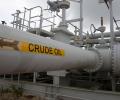
The government has slashed the windfall profit tax levied on domestically-produced crude oil as well as on export of diesel and ATF following a drop in global oil prices, according to an official order. The levy on crude oil produced by companies such as Oil and Natural Gas Corporation (ONGC) has been cut steeply to Rs 1,700 per tonne from Rs 4,900, the order dated December 15 said. Crude oil pumped out of the ground is refined and converted into fuel like petrol, diesel and aviation turbine fuel (ATF).
